The problem
Every proposal an advisory firm sends is assembled the same way: the last good one gets copied, the names and numbers get patched, the credentials slide gets refreshed, and a senior person reads it twice to catch what slipped. The firm’s knowledge is all there, in old decks and bios and case summaries. None of it is in a form a new proposal can draw on directly.
What we built
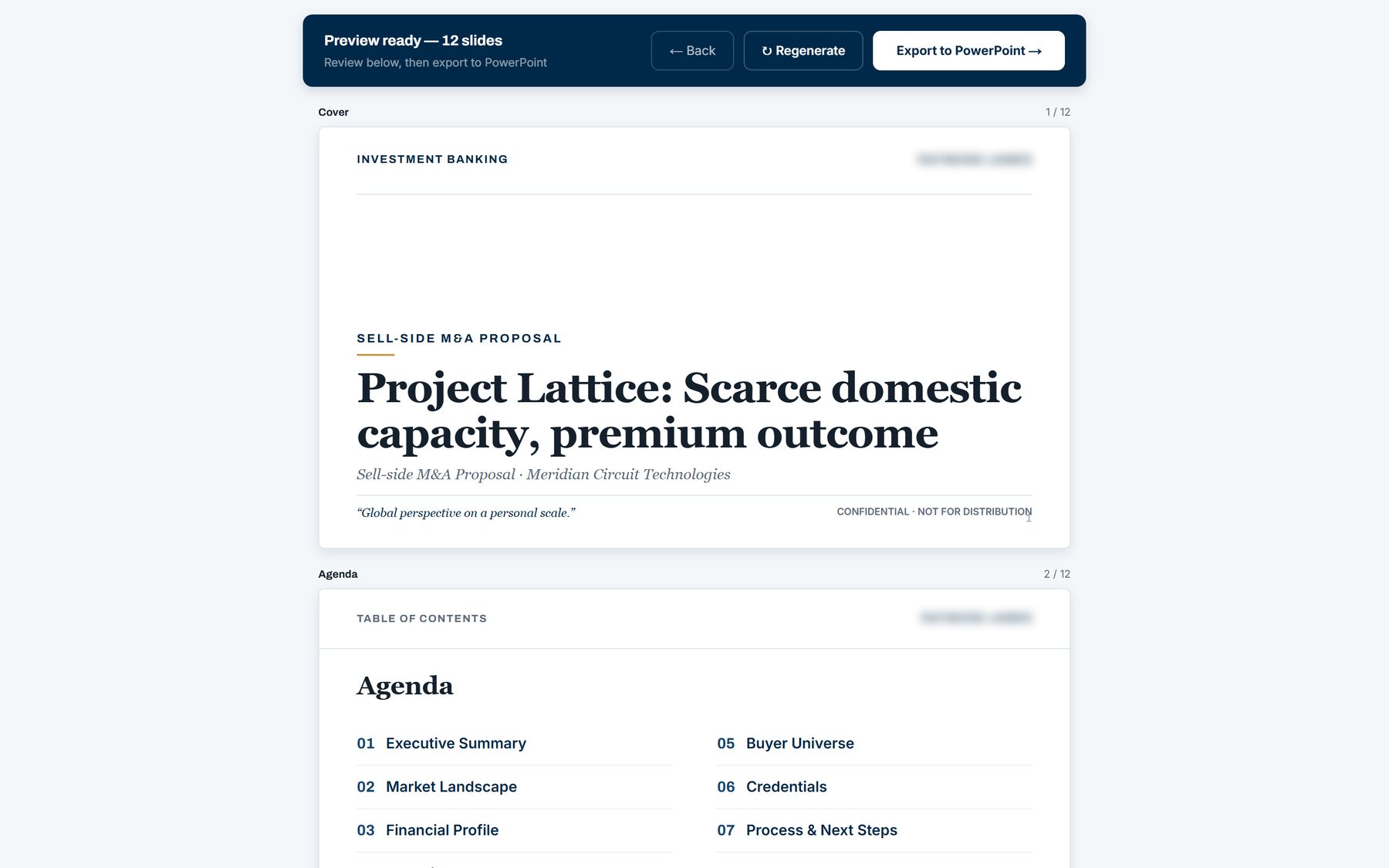
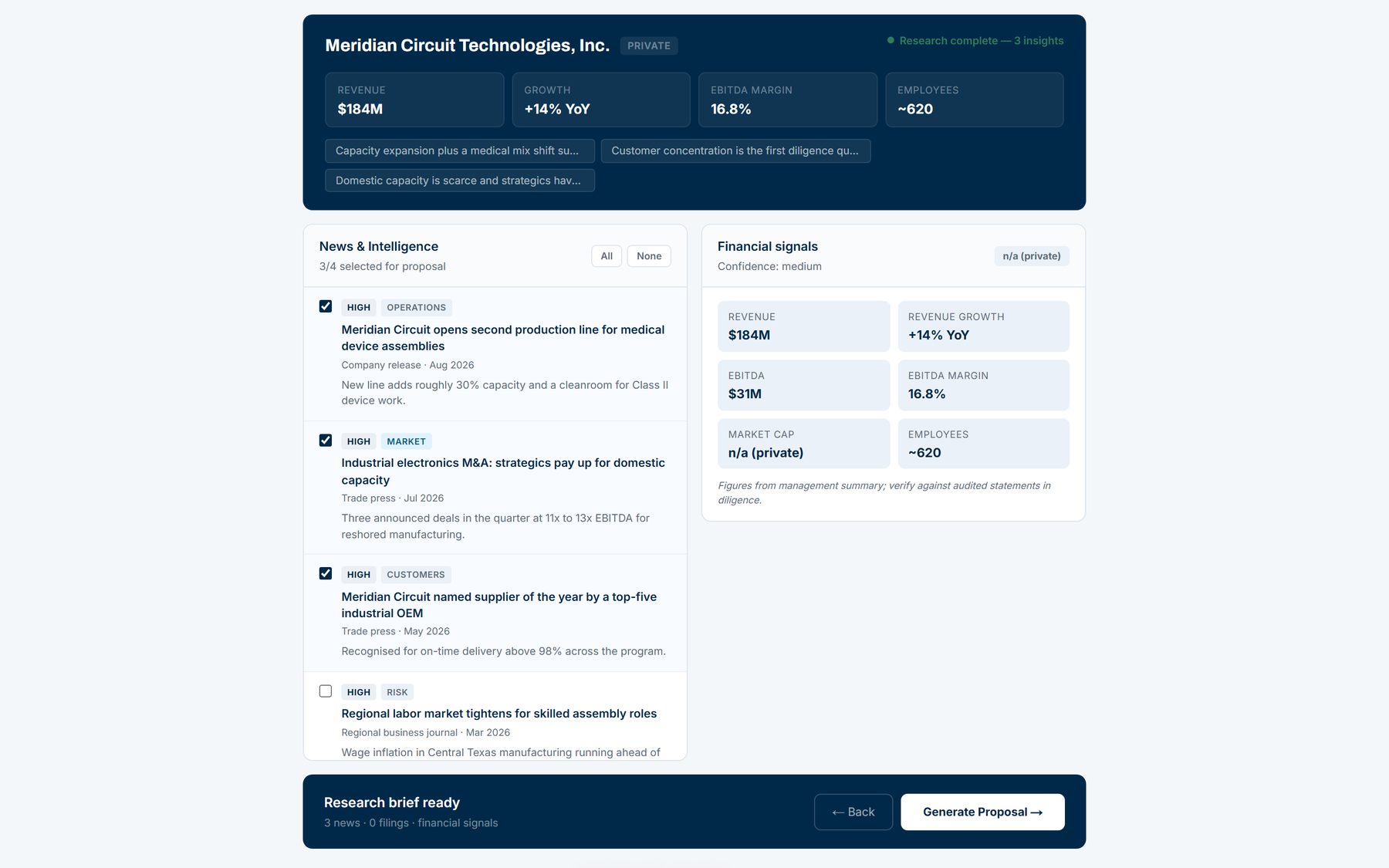
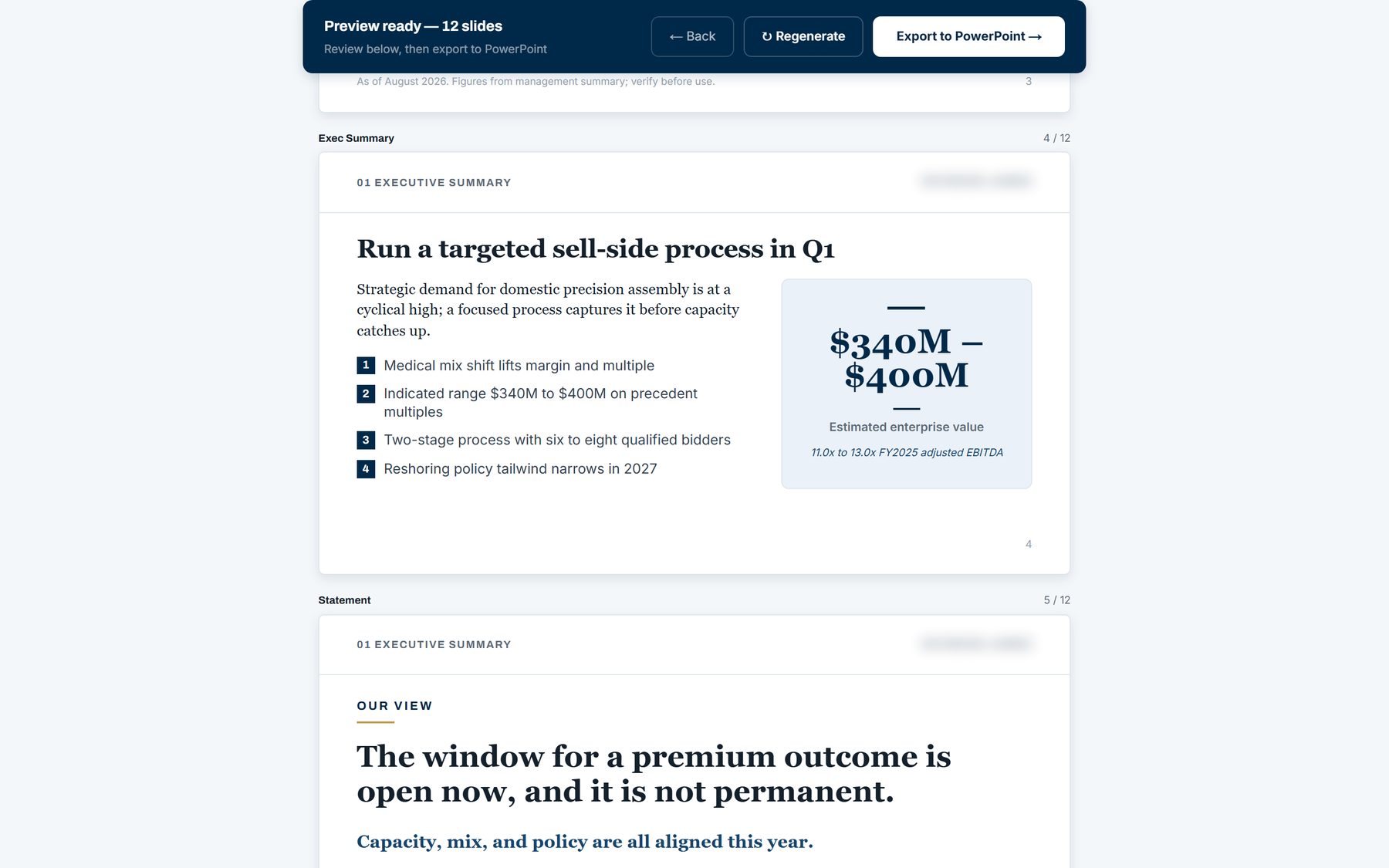
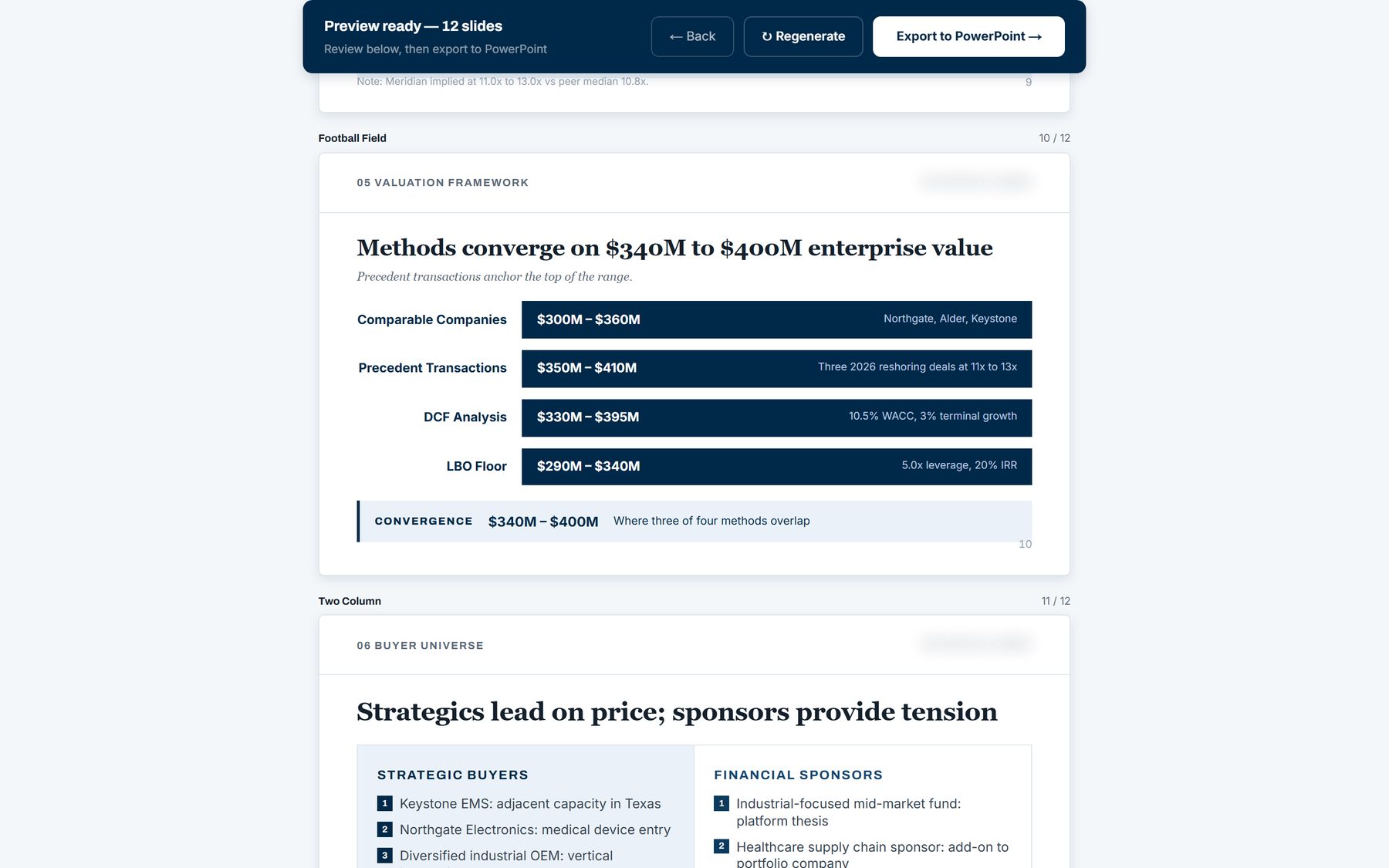
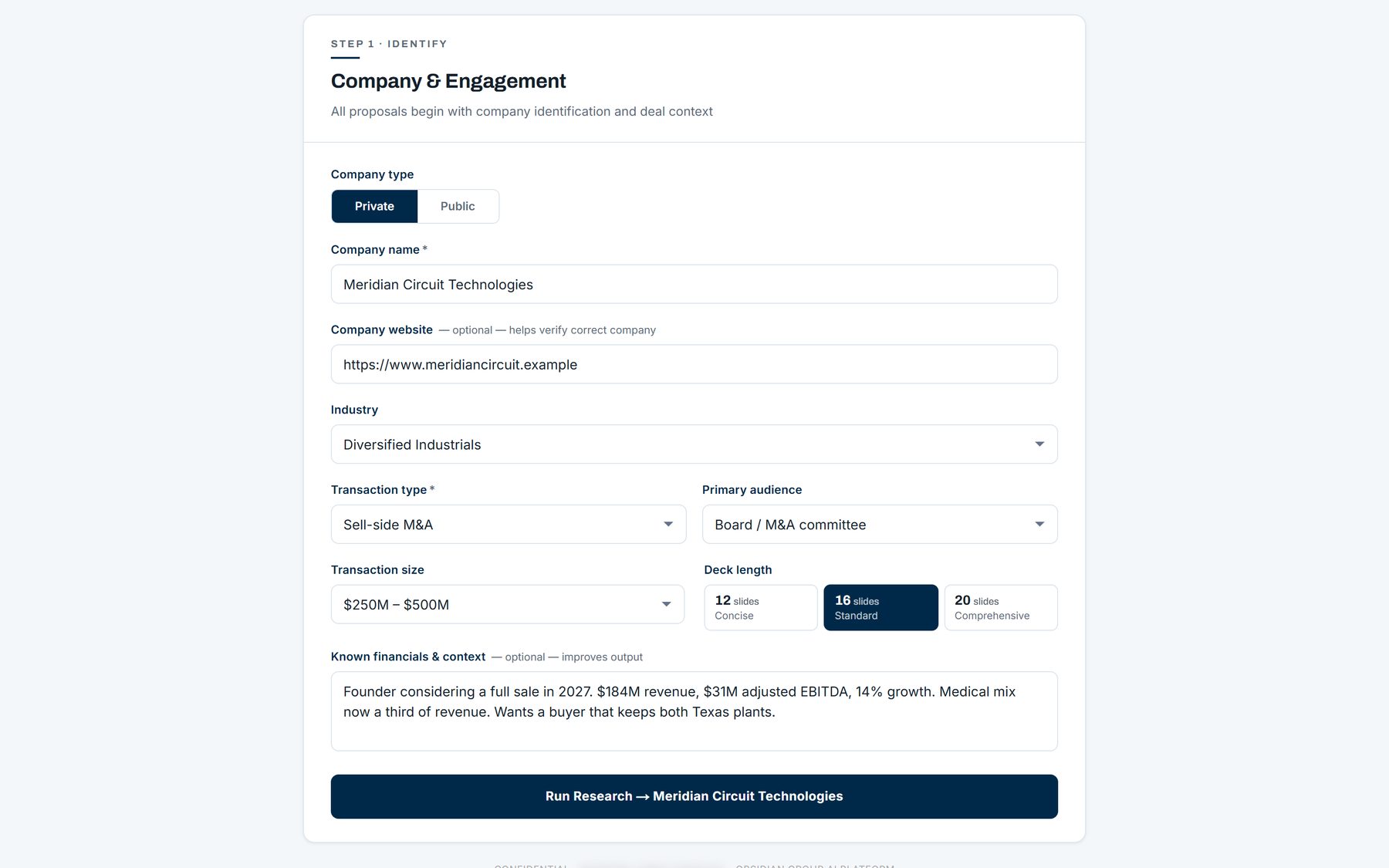
A generator that holds the firm’s material and writes from it. The user describes the target and the situation in a few lines. The tool drafts the situation overview, the approach, the team, relevant credentials, and the process timeline, in the firm’s voice, and renders it into the firm’s own slide template.
- One tenant per firm. Each firm’s templates, bios, credentials, and tone live in its own tenant. The same engine, a different firm on each domain.
- Grounded, not generated from thin air. Credentials and team bios come from the firm’s material. Where the draft needs a fact it does not have, it says so rather than inventing one.
- The firm’s template, not a lookalike. The output is the firm’s actual deck file with the content filled in, so the draft is editable in the tool the team already uses.
Why it matters
This is a demonstration we build on a prospective client’s real material to show what the engagement would deliver. The point is not the draft itself. It is the hours between “we should pitch them” and a document a partner can mark up.