The problem
Sell-side advisors spend their first weeks with a new client reconstructing one number: adjusted EBITDA. The seller’s books are messy, the add-backs are scattered across owner memory and general ledger detail, and the conversation about value cannot start until the schedule exists. The firm wanted a way to show prospective clients that work, and its own value, before the engagement letter was signed.
What we built
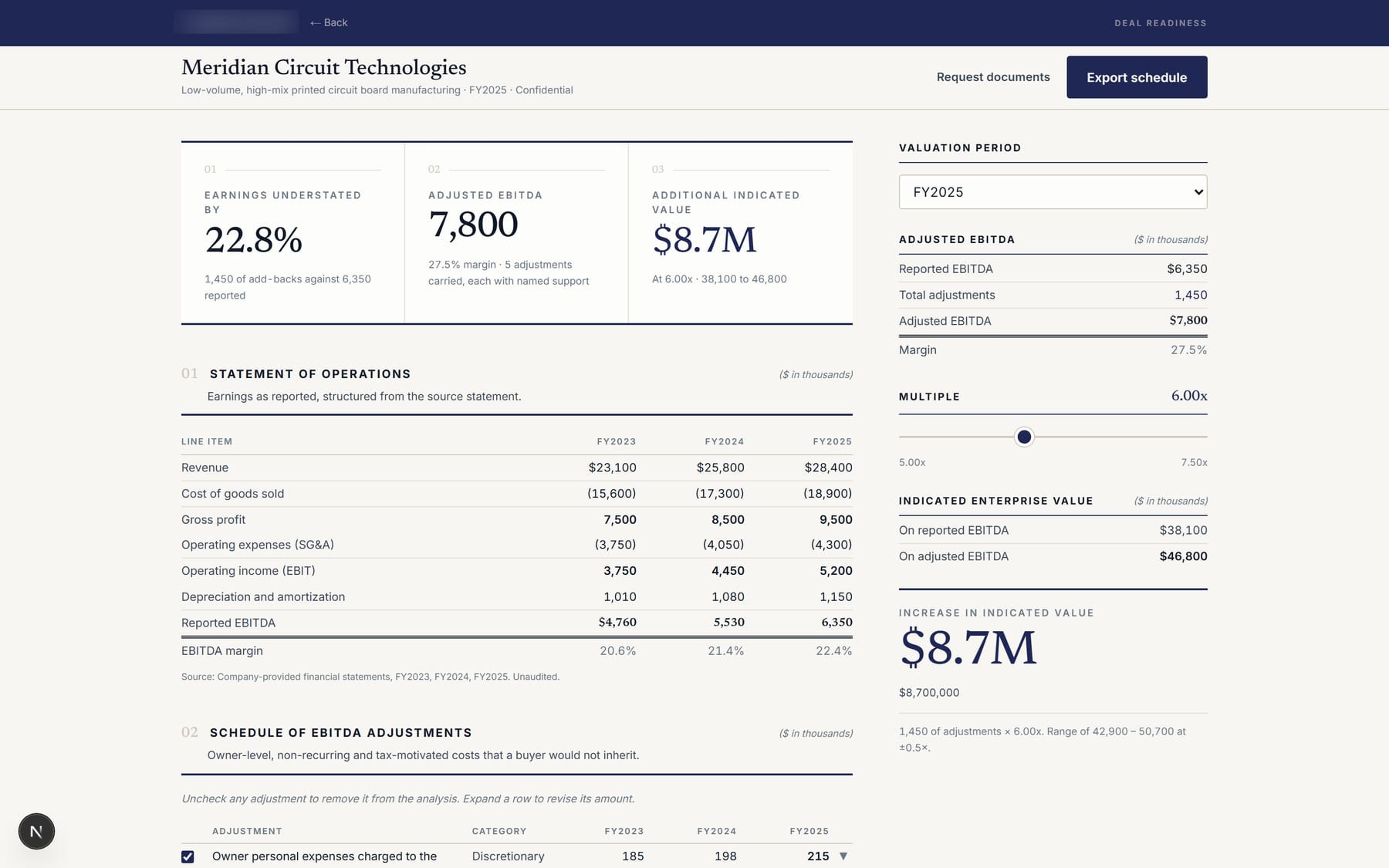
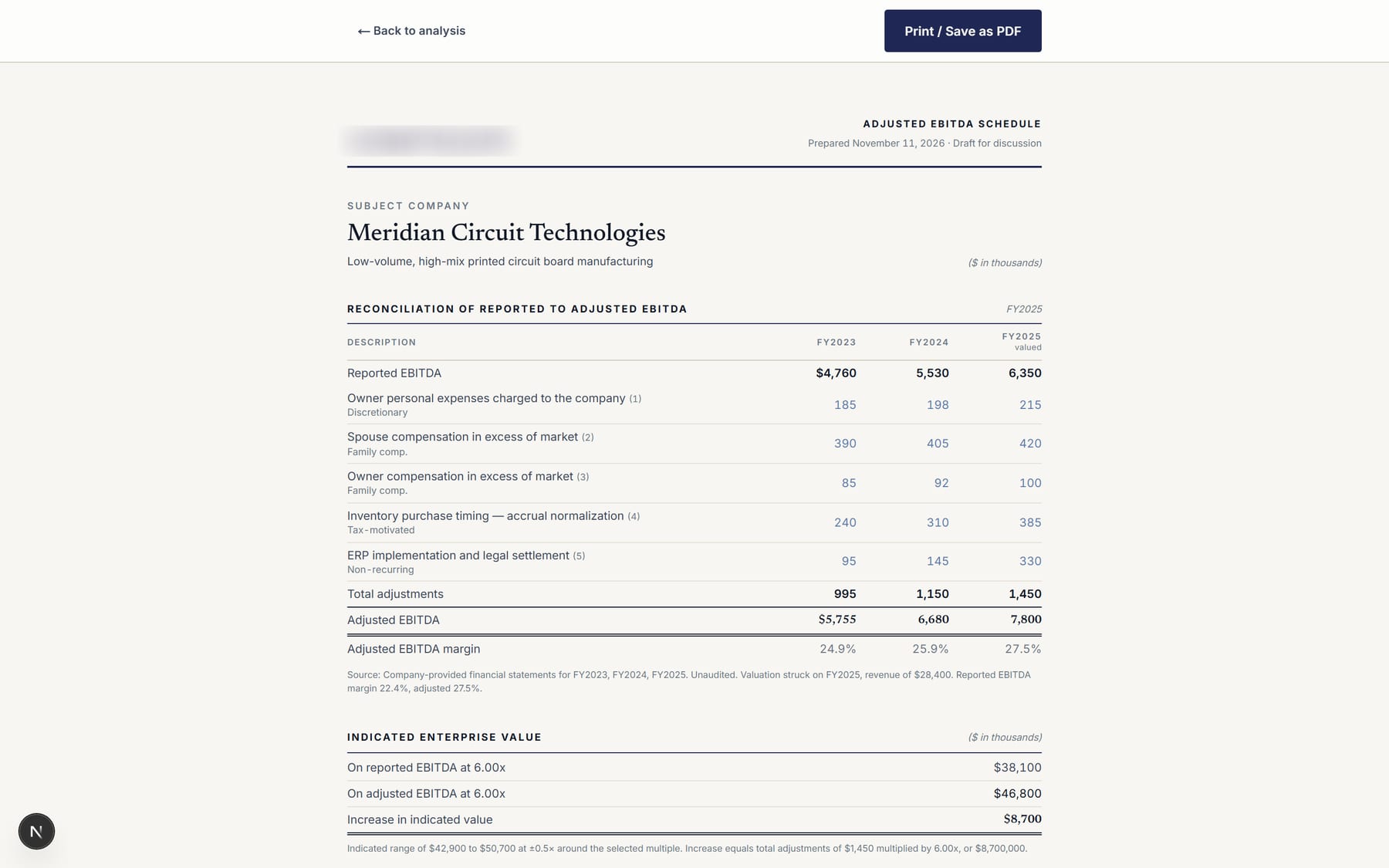
A gated portal that does exactly one thing well. A prospective seller uploads an income statement or trial balance. The portal walks through the add-back categories the firm’s own partners use, quantifies each one, and produces a clean, firm-branded adjusted EBITDA schedule with a live bridge from reported EBITDA to enterprise value at a chosen multiple.
- The firm’s mental model, made visible. Reported EBITDA, identify and quantify add-backs, adjusted EBITDA times market multiple equals enterprise value. The tool follows the arc the partners already use in the room.
- Drafted justifications. Each add-back gets a short, defensible justification drafted by Claude from the figures and category, with an offline fallback so the tool never stalls.
- Nothing leaves the browser. Spreadsheets are parsed client-side. Financial state lives in memory. The only durable store in the entire product is the access gate’s use counter. That was the compliance conversation, settled by design.
- A branded output. A print-optimized view produces a PDF the seller can keep, carrying the firm’s mark.
Why it matters
The portal turns a sales conversation into a demonstration. A prospect sees their own numbers organized the way the firm would organize them, and sees the dollars the add-backs unlock. It is a trojan demo: one real capability, executed well, that makes the case for the full engagement.