Why we built it
The first week of any banking pitch is the same week every time: pull filings, build the comps, reconcile the numbers, format the deck. Associates do it by hand, and the output is only as trustworthy as the last person who touched the spreadsheet. We built the tool we wished we had.
What it does
- Provenance first. Financials are pulled from SEC filings and stored with their source. Every figure in the summary clicks through to the filing and line it came from. A number without a source does not exist in the system.
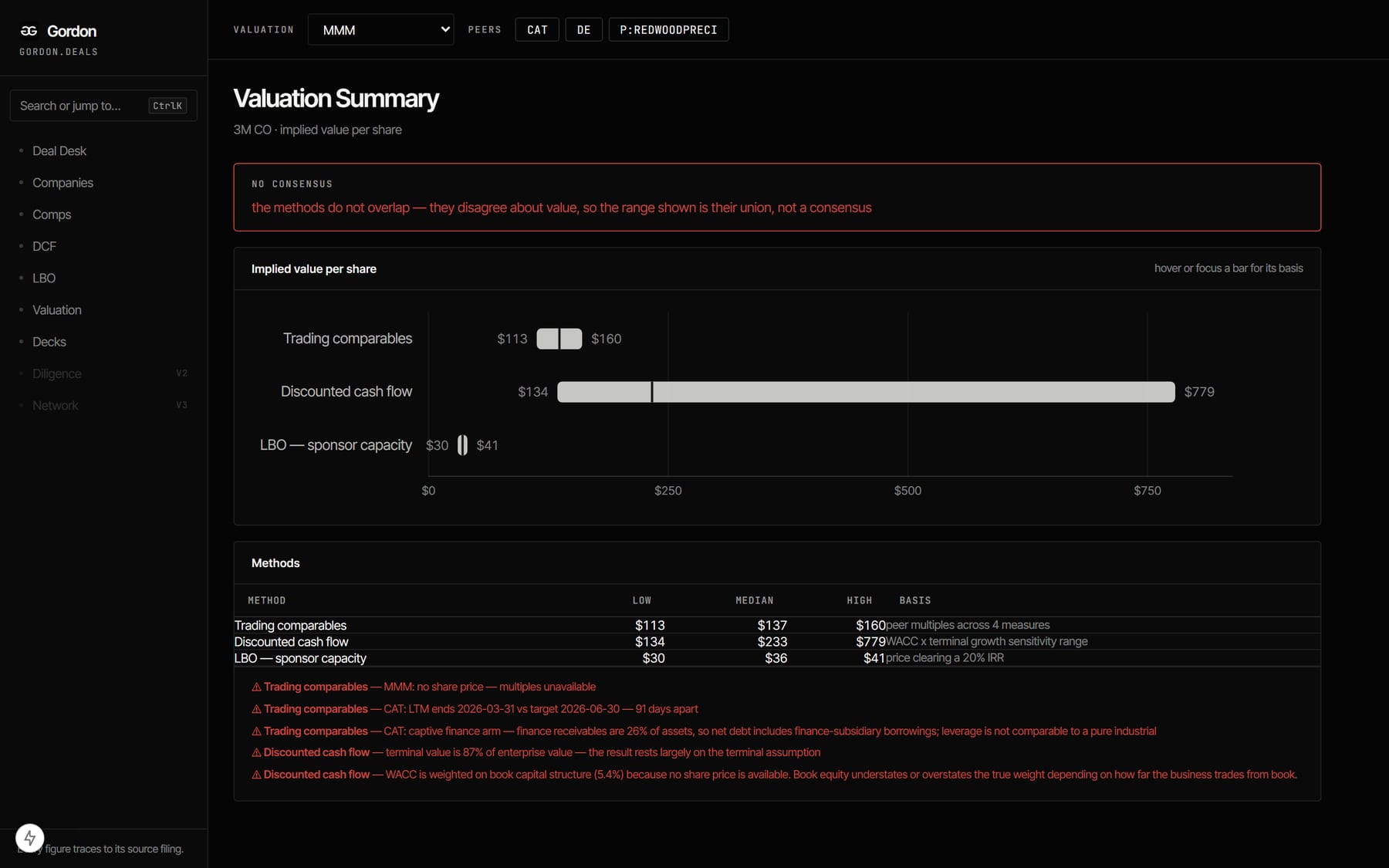
- Comps that behave like a banker’s. Peer sets with medians that exclude the target, flags for fiscal-year mismatches and captive finance arms, and last-twelve-months math done the way a reviewer expects.
- An Excel model you can defend. The comps sheet is formulas only, over a data sheet of hardcodes, with provenance in cell notes. Nothing is pasted as a value.
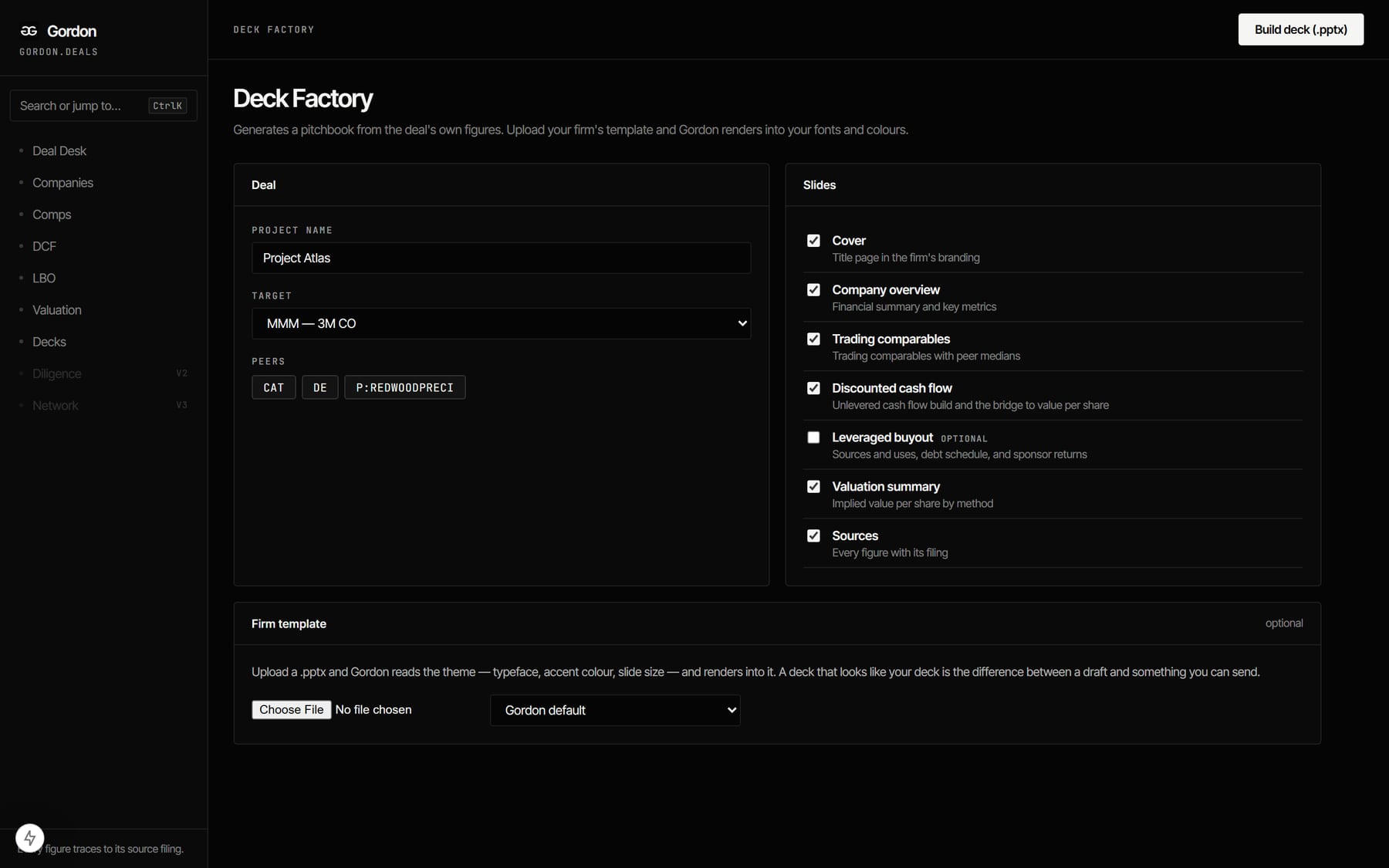
- A deck in your template. Upload the firm’s own PowerPoint template once. The engine reads its fonts, accent colors, and slide size and renders the pitch pages into it, so the output looks like the firm made it, because it did.
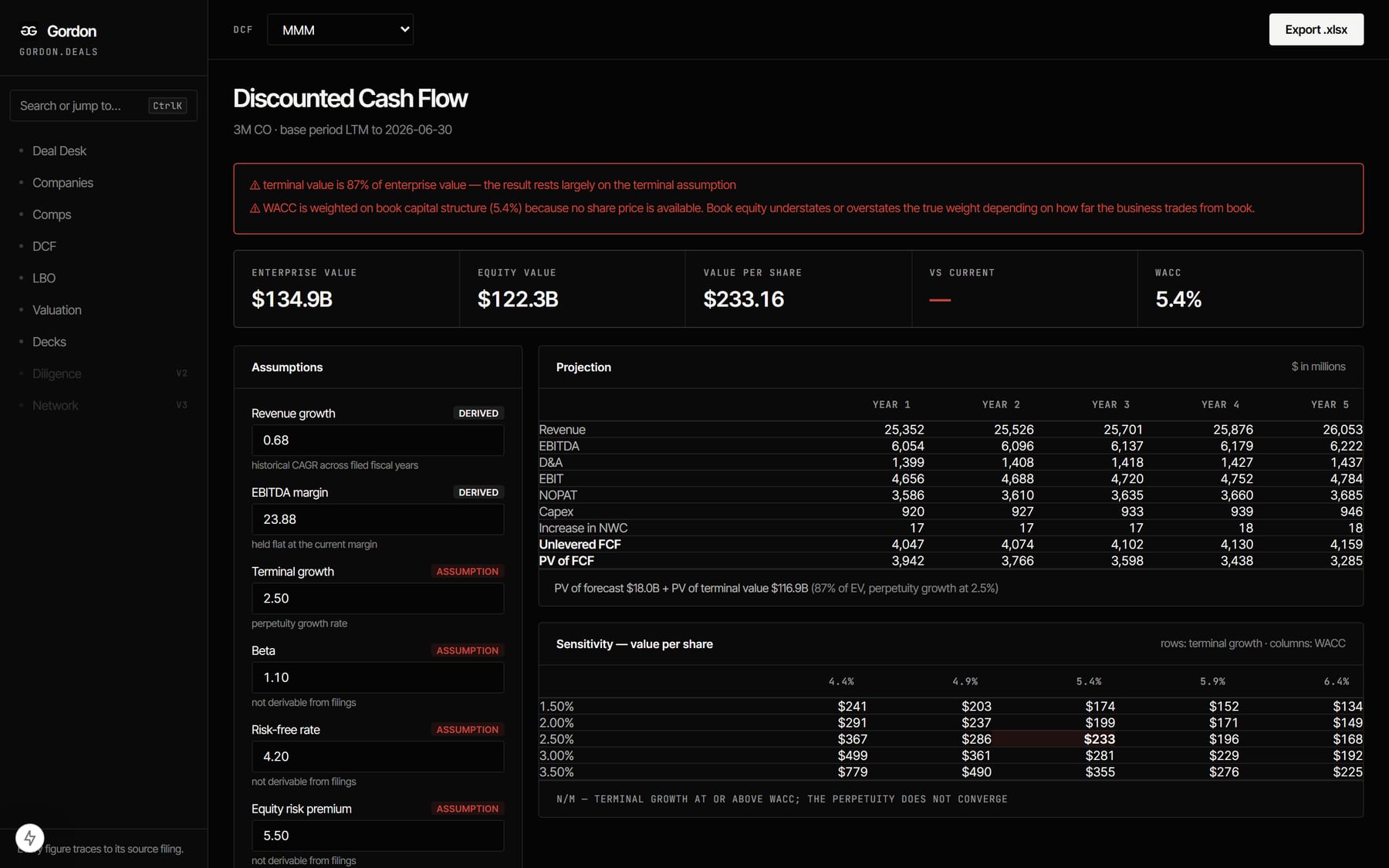
- Valuation and private companies. A football field across methods, a DCF, and support for private comparables entered with their own provenance.
Where it is
Live and gated, in use for our own work and available for firms that want the engine running on their templates and their peer sets. It is also the foundation we build from when a bank asks for a sprint: the data layer, the provenance model, and the rendering pipeline are already there.